


Mehr als ein Öl: ein funktionaler Bestandteil deiner Ernährung
Die Omega-3 Algenöle liefern DHA und EPA aus Mikroalgen – zwei langkettige Omega-3-Fettsäuren, die gezielt zur täglichen Versorgung beitragen. Als flüssiges Öl lässt es sich einfach dosieren und bewusst in deine persönliche Ernährungsroutine integrieren.


- DHA trägt zur Erhaltung einer normalen Gehirnfunktion bei.*
- DHA trägt zur Erhaltung normaler Sehkraft bei.*
- EPA und DHA tragen zu einer normalen Herzfunktion bei.**
Darunter sauber auflösen:
* Die positive Wirkung stellt sich bei einer täglichen Aufnahme von 250 mg DHA ein.
** Die positive Wirkung stellt sich bei einer täglichen Aufnahme von 250 mg EPA und DHA ein.
Für alle, die Omega-3 einfach und geschmacksneutral einnehmen möchten.
Die Kapseln liefern pro Tagesportion 576 mg DHA und 288 mg EPA. Sie sind praktisch für Alltag, Reise und feste Routinen.
Dosierung: Erwachsene nehmen 1x täglich 2 Kapseln mit Flüssigkeit zu einer Mahlzeit ein.
Besonders geeignet für:
- unterwegs
- geschmackssensible Personen
- alle, die keine Öle mögen
- klare Dosierung ohne Tropfenzählen
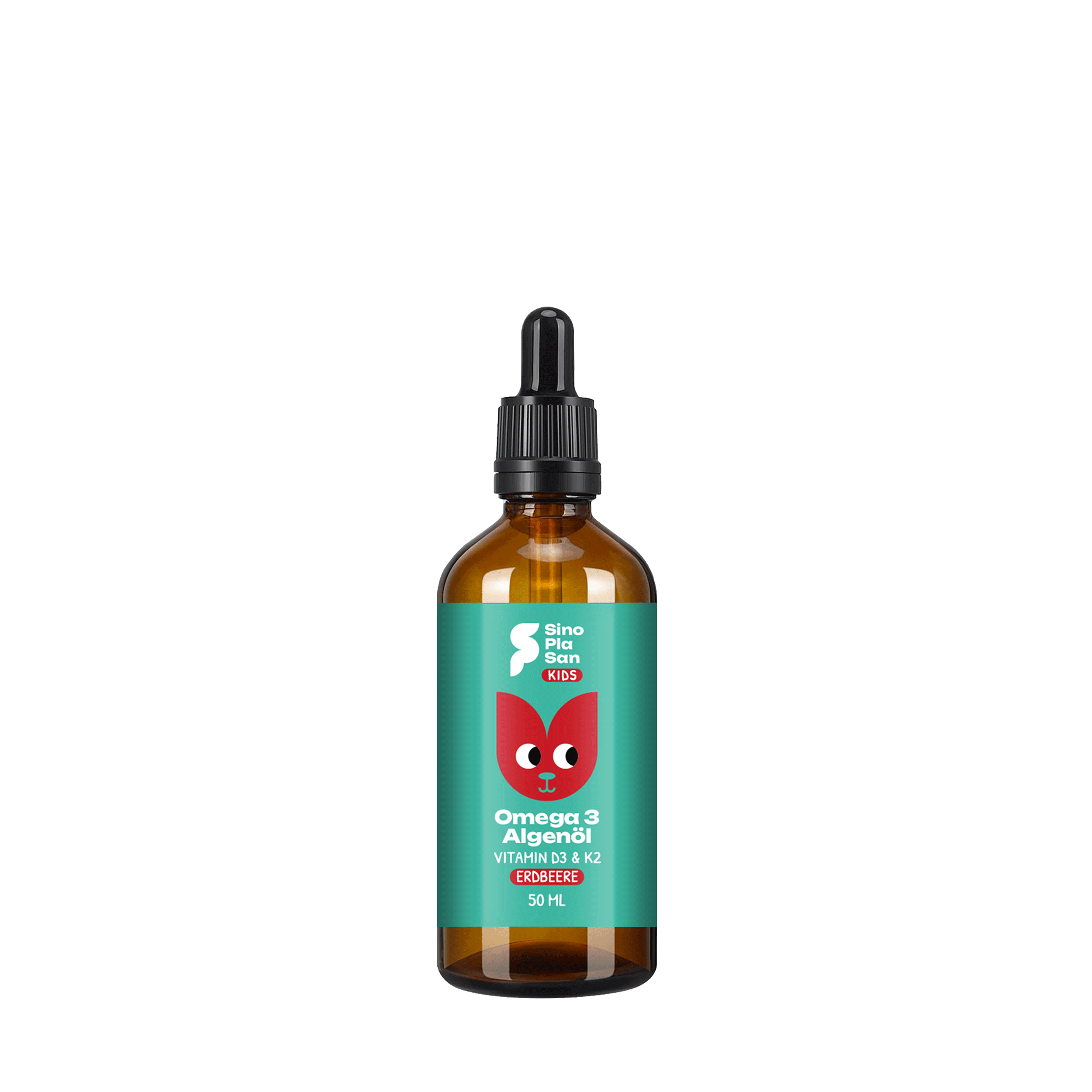
Für Kinder ab 3 Jahren – mit Erdbeergeschmack.
Viele Kinder essen selten Fisch. Das Kids Algenöl liefert DHA und EPA aus Mikroalgen und ist durch die Pipette einfach dosierbar.
Zusätzlich enthält es Vitamin D3 und K2. Vitamin D trägt zur normalen Funktion des Immunsystems bei, zur Erhaltung normaler Knochen und zur Erhaltung normaler Zähne.
Das macht Vitamin D besonders sinnvoll für Kinder in der Wachstumsphase.
Dosierung:
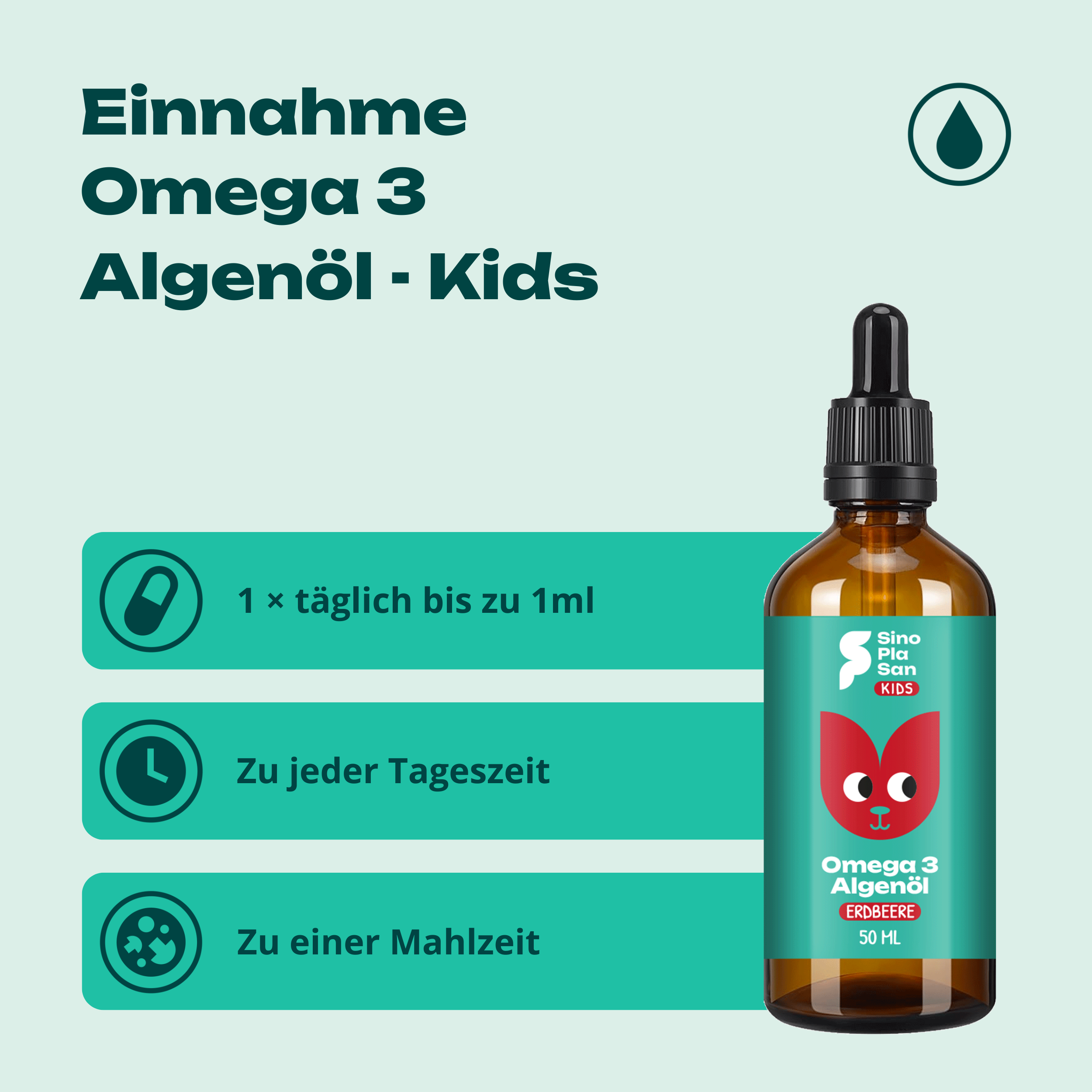
Ab 3 Jahren: 0,5 ml täglich
Ab 10 Jahren: 1 ml täglich
Wichtig: Für Kinder unter 36 Monaten nicht geeignet. Keine zusätzlichen Vitamin-D3-Präparate einnehmen, sofern nicht ärztlich abgestimmt.
Besonders geeignet für:
- Kinder ab 3 Jahren
- Familien mit wenig Fisch auf dem Speiseplan
- Kinder, die Fischgeschmack nicht mögen
- vegane oder vegetarische Familien

Omega-3: What is it good for?
DHA and EPA perform important functions in the body.
Approved health claims according to the EU Health
Claims Register:
- DHA contributes to the maintenance of normal brain function.
- DHA contributes to the maintenance of normal vision.
- EPA and DHA contribute to the normal function of the heart.
The beneficial effects are obtained with a daily intake of 250 mg DHA or 250 mg EPA and DHA.
Product Finder
Which Omega-3 is right for you?
Whether it's liquid oil, practical capsules, a kids' version, or a PUR version: Choose the Omega-3 algal oil that best suits your daily routine.
All products provide DHA and EPA from vegan algal oil – the difference lies in form, taste, and dosage.
For everyone who wants to take Omega-3 in liquid form.
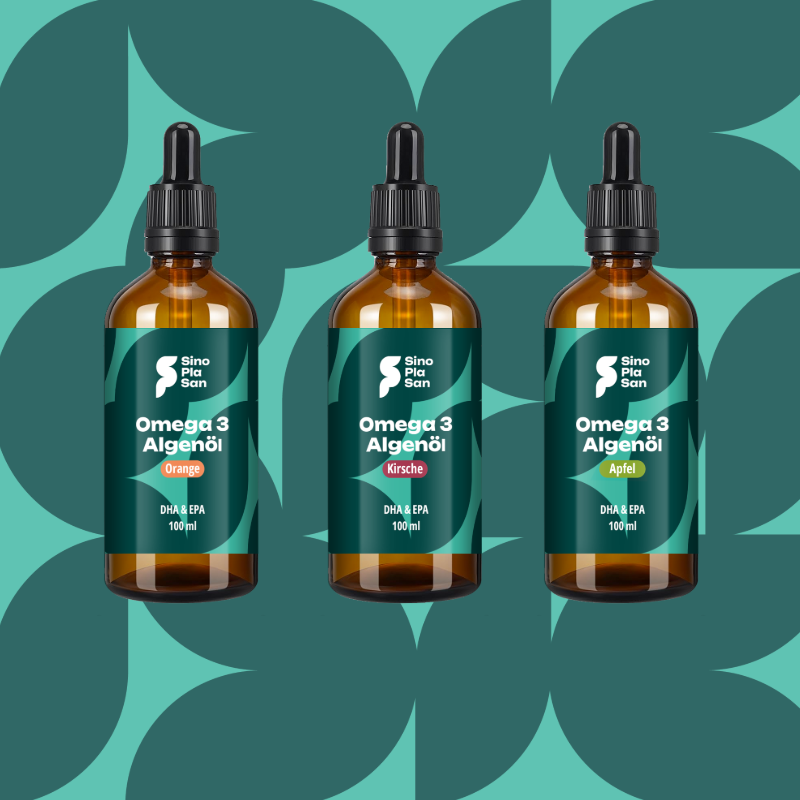
The vegan algal oil provides 1,000 mg DHA and 535 mg EPA per daily serving. It is available in orange, cherry, and apple and is ideal if you don't want to swallow capsules.
Dosage: Adults take up to 2.5 ml / 75 drops once daily with a meal.
Especially suitable for:
- Adults
- Vegans and vegetarians
- People who eat little fish
- Anyone who prefers liquid dosage
For everyone who wants to take Omega-3 easily and without taste.
The capsules provide 576 mg DHA and 288 mg EPA per daily serving. They are practical for everyday life, travel, and fixed routines.
Dosage: Adults take 2 capsules once daily with liquid with a meal.
Especially suitable for:
- on the go
- taste-sensitive individuals
- everyone who doesn't like oils
- clear dosage without counting drops
For children aged 3 years and over – with strawberry flavor.
Many children rarely eat fish. The Kids Algae Oil provides DHA and EPA from microalgae and is easy to dose with the pipette.
It also contains vitamins D3 and K2. Vitamin D contributes to the normal function of the immune system, to the maintenance of normal bones, and to the maintenance of normal teeth.
This makes vitamin D particularly useful for children during growth phases.
Dosage:
From 3 years: 0.5 ml daily
From 10 years: 1 ml daily
Important: Not suitable for children under 36 months. Do not take additional vitamin D3 supplements unless medically approved.
Particularly suitable for:
- Children from 3 years of age
- Families with little fish in their diet
- Children who do not like the taste of fish
- Vegan or vegetarian families

Why Algae Oil Instead of Fish Oil?
Algal oil is the direct plant-based source of DHA and EPA.
Your advantages:
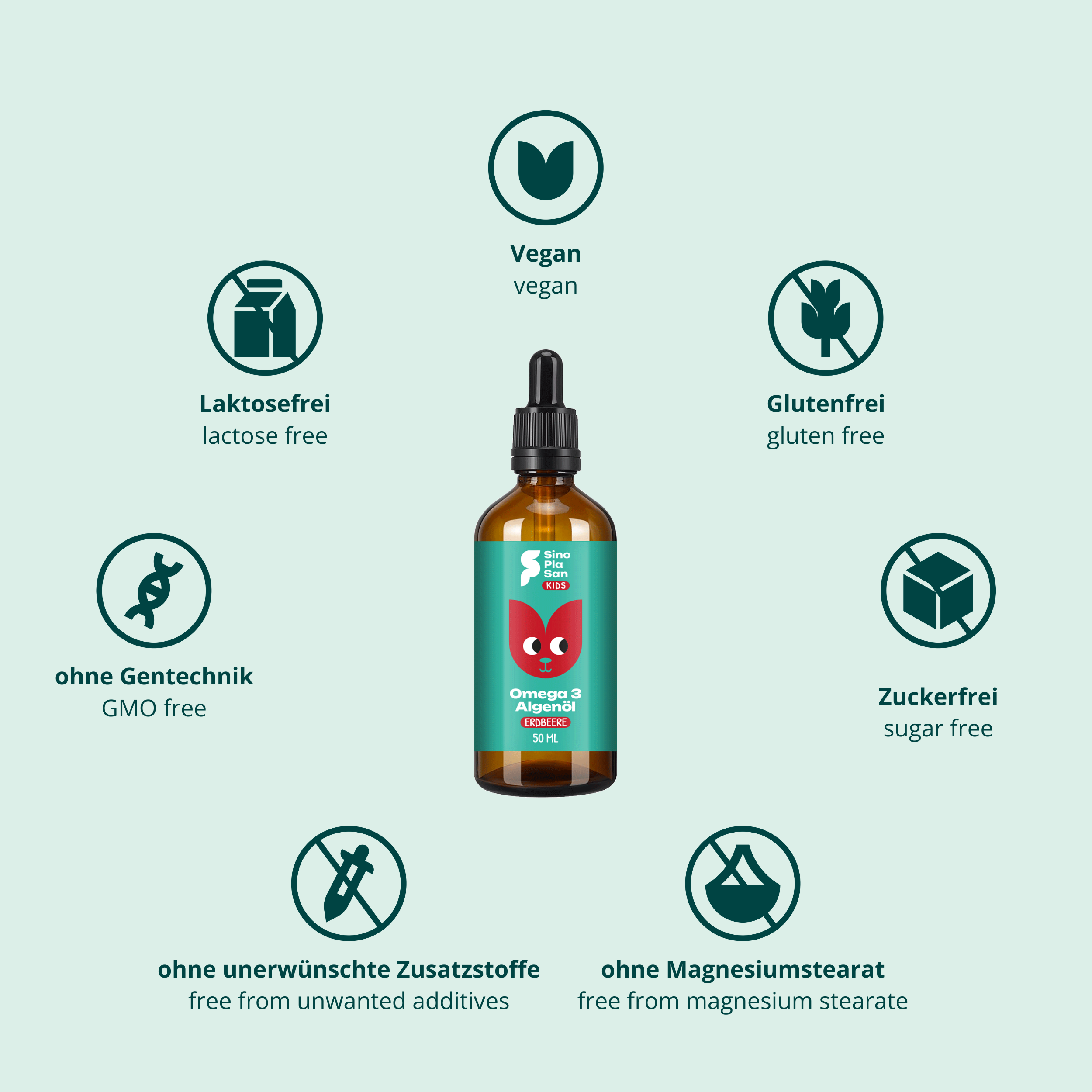
- vegan
- fish-free
- free from microplastics and heavy metals
- direct source of DHA & EPA
- no fish taste
- no animal ingredients
- not diluted with olive oil
Who is Omega-3 algal oil particularly interesting for?
Many people in Germany consume few direct DHA and EPA sources through their diet. According to the BfR, the average intake of DHA and EPA in adults in Germany is only about 127 to 295 mg per day, depending on the group.
Omega-3 algal oil is therefore particularly interesting for people who eat little fish or who want to get DHA and EPA directly from a vegan source.
Ideal for:
- Vegans
- Vegetarians
- People who rarely eat fish
- Children who dislike fish
- Families
- Pregnant and breastfeeding women after consultation
- Anyone who wants to avoid fish oil


Rich in omega-3 fatty acids. Premium food supplement.
Omega-3 fatty acids are essential for a healthy lifestyle. Around 70% of the German population does not have an adequate supply of omega-3. Support your health with omega-3 fatty acids.
Rich in omega-3 fatty acids. Premium food supplement.
Omega-3 fatty acids are essential for a healthy lifestyle. Around 70% of the German population does not have an adequate supply of omega-3. Support your health with omega-3 fatty acids.


Rich in omega-3 fatty acids. Premium food supplement.
Omega-3 fatty acids are essential for a healthy lifestyle. Around 70% of the German population does not have an adequate supply of omega-3. Support your health with omega-3 fatty acids.
Rich in omega-3 fatty acids. Premium food supplement.
Omega-3 fatty acids are essential for a healthy lifestyle. Around 70% of the German population does not have an adequate supply of omega-3. Support your health with omega-3 fatty acids.
Questions & Answers
Is Omega-3 only found in fish?
No. DHA and EPA are also found in microalgae and sea algae. Fish absorb omega-3 through the food chain. Algae oil delivers DHA and EPA directly from the original source.
What is the difference between ALA, EPA, and DHA?
ALA is a plant-based omega-3 fatty acid, found for example in linseed oil or walnuts. EPA and DHA are long-chain omega-3 fatty acids. The body can produce EPA and DHA from ALA, but only to a limited extent.
Is algae oil vegan?
Yes. SinoPlaSan Omega-3 Algae Oil is derived from microalgae and is fish-free.
What's better: fish oil or algal oil?
That depends on your needs. Algae oil is vegan, fish-free and a direct source of DHA and EPA. It is particularly suitable for people who want to avoid fish oil or who eat a vegetarian or vegan diet.
What is Omega-3 good for?
DHA contributes to the maintenance of normal brain function and normal vision. EPA and DHA contribute to normal heart function. The positive effects are achieved with a daily intake of 250 mg DHA and 250 mg EPA and DHA, respectively.

Is Omega-3 only found in fish?
No. DHA and EPA are also found in microalgae and sea algae. Fish absorb omega-3 through the food chain. Algae oil delivers DHA and EPA directly from the original source.
What is the difference between ALA, EPA, and DHA?
ALA is a plant-based omega-3 fatty acid, found for example in linseed oil or walnuts. EPA and DHA are long-chain omega-3 fatty acids. The body can produce EPA and DHA from ALA, but only to a limited extent.
Is algae oil vegan?
Yes. SinoPlaSan Omega-3 Algae Oil is derived from microalgae and is fish-free.
What's better: fish oil or algal oil?
That depends on your needs. Algae oil is vegan, fish-free and a direct source of DHA and EPA. It is particularly suitable for people who want to avoid fish oil or who eat a vegetarian or vegan diet.
What is Omega-3 good for?
DHA contributes to the maintenance of normal brain function and normal vision. EPA and DHA contribute to normal heart function. The positive effects are achieved with a daily intake of 250 mg DHA and 250 mg EPA and DHA, respectively.