
5. Magnesium L-Ascorbate (Vitamin C)
Magnesium L-ascorbate is a particularly gentle, well-tolerated, and alkaline vitamin C compound. It is particularly suitable for users who cannot tolerate conventional vitamin C products (often containing ascorbic acid).
Vitamin C contributes to:
- to normal function of the immune system during and after intense physical activity
- to normal collagen formation for normal function of blood vessels, bones, cartilage, gums, skin and teeth
- to a normal energy metabolism
- to normal functioning of the nervous system
- to normal psychological function
- to protect cells from oxidative stress for normal immune system function
- to reduce tiredness and fatigue
- for the regeneration of the reduced form of vitamin E in
- to improve iron absorption
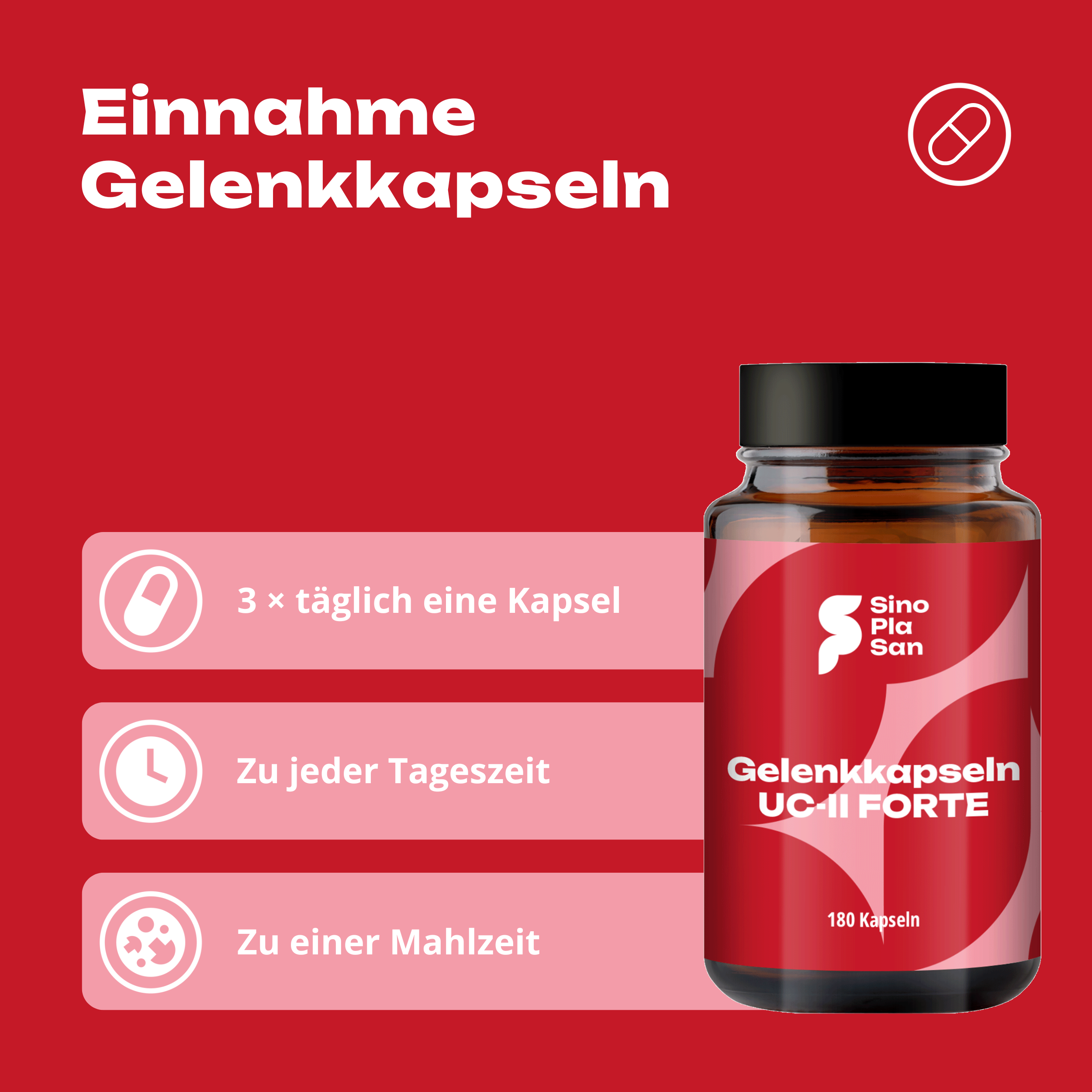
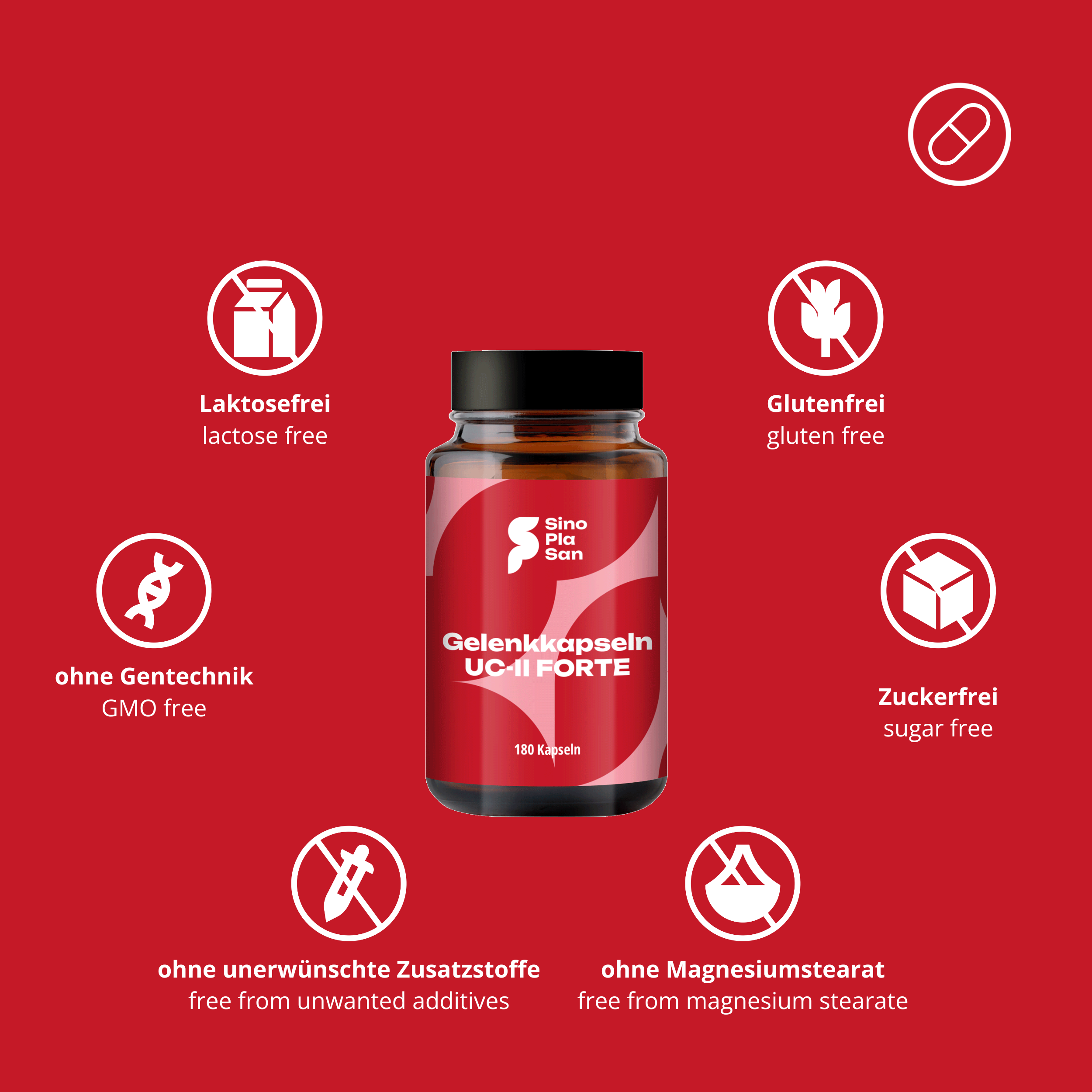
6. Collagen Type II (UC®-II)
Collagen accounts for the largest proportion of human protein at 30%. It ensures normal movement, elasticity, and strength of connective tissue, bones, and cartilage.
UC-II is a special type II collagen naturally produced from chicken breast bone. This form of collagen is particularly valuable because it is undenatured—in other words, it is still in its natural form. Type II collagen is also a major component of human cartilage and, among other things, ensures its strength.
7. Manganese
Manganese is an essential trace element and is responsible for the activation of many enzymes in the body. Manganese also contributes to the maintenance of normal bones and normal connective tissue formation.
8. Vitamin D3
Vitamin D, which has been researched for decades, is known for its versatile and astonishing effects on almost every area of the human body. Vitamin D (calciferol) is also known as the "sunshine vitamin" because the body can largely produce it itself with the help of sunlight. There are two different forms of vitamin D: vitamin D2 (ergocalciferol) and vitamin D3 (cholecalciferol). Vitamin D2 is the form found primarily in plants, while vitamin D3 is found primarily in non-plant organisms. Thus, the vitamin D3 form is also present in humans, and this appears to be significantly more effective and easier for the body to absorb.